If your gas ducted heating system is operational but emitting unusual noises, or if you’ve noticed an increase in your energy bills, you might be considering a change. Are you weighing the benefits of gas versus reverse cycle heating for your Melbourne home in 2026? Let’s delve into these options comprehensively and without any sales rhetoric, empowering you to make an informed decision.
Navigate Melbourne’s Heating Regulations and Upcoming Changes for 2026
Beginning January 1, 2024, the Victorian Government has instituted a gas ban for new residential constructions. This regulation stipulates that any new homes requiring planning permits cannot connect to mains gas and must instead utilise all-electric systems. This initiative is enforced by the Victorian Department of Energy, Environment and Climate Action and applies statewide. For comprehensive information regarding this policy, please visit the Energy Victoria website.
Here’s what this policy implies for homeowners:
- If your home relies on gas: You have no immediate obligation to alter your system. You can continue using your existing ducted gas system, replace it with another gas unit when it reaches the end of its lifespan, or opt to transition to reverse cycle heating at your discretion.
- If you are building a new home: You must adopt an all-electric approach. Reverse cycle heating and cooling has become the standard for all new constructions.
- If you are making significant renovations that require new gas lines: Consult with your builder, as some councils are beginning to enforce restrictions on new gas installations, even in existing homes.
Evaluate the Benefits of Ducted Gas Heating for Melbourne Homes
Ducted gas heating continues to be a practical choice for many households in Melbourne. Its benefits are significant:
- Rapid heating: Gas burners reach their operating temperature quickly. In contrast, reverse cycle systems may require more time to warm up, especially during cold mornings when your home has been chilly overnight.
- Reliable heat distribution: Well-designed ductwork ensures that heat is evenly spread throughout your home, delivering comfort to every room.
- Efficiency in extreme cold: Gas systems maintain their efficiency even when outdoor temperatures drop significantly. Although modern reverse cycle units perform adequately in Melbourne’s coldest conditions, gas systems hold a distinct advantage.
- Utilisation of existing infrastructure: If your ductwork, controls, and gas lines are in good condition, replacing your gas unit with a new ducted gas heater is typically a cost-effective option and can often be completed in a single day, contrasting with the transition to a reverse cycle system.
Compare the Advantages of Reverse Cycle Systems Over Ducted Gas
- Dual heating and cooling: A reverse cycle system provides warmth in winter and cooling in summer, eliminating the need for a separate cooling system that ducted gas cannot provide.
- Reduced operational costs: Modern reverse cycle systems are highly efficient, producing three to five units of heat for each unit of electricity consumed, a level of efficiency that gas systems struggle to match.
- No combustion emissions: Reverse cycle systems mitigate the risks associated with gas combustion, including the need for flues and concerns regarding carbon monoxide safety.
- Improved zoning options: Many new reverse cycle systems allow for individual rooms to be heated or cooled independently, avoiding unnecessary heating in unoccupied areas.
- Future-proof investment: With gas prices in Victoria steadily increasing over the past five years, reverse cycle systems offer a safeguard against rising energy costs.
Annual Running Costs Comparison for a Typical Three-Bedroom Home in Melbourne
Here are realistic annual running cost estimates for a standard three-bedroom home in Melbourne during 2026, assuming average occupancy:
- Annual running cost for ducted gas: This generally ranges from $1,200 to $2,000, influenced by usage patterns, energy tariffs, and the efficiency of the unit.
- Annual running cost for ducted reverse cycle: This typically falls between $700 and $1,400 for units rated five stars or above.
- Cost savings: Households can anticipate savings of between $400 and $800 annually by switching, not including the added cooling provided by a reverse cycle system.
It is essential to recognise that homes with poor insulation, oversized rooms, or extensive glass features may incur higher costs within these ranges, regardless of the chosen heating system. Addressing draughts, insulating ceilings, and implementing effective zoning strategies can significantly impact your energy bills more than the selection of the heating system itself. For a thorough cost analysis regarding the transition, consult our guides on replacing gas ducted heating in Melbourne and moving from gas to electric heating.
Identify Scenarios Where Ducted Gas Heating Remains a Strong Option
- If your current gas system is less than 10 years old and functioning well: You can replace it with a similar unit when it eventually fails, maintaining an efficient asset.
- If your home has limited electrical capacity: Older homes with low-amperage supplies may require a switchboard upgrade to support a ducted reverse cycle system, potentially increasing the overall transition cost.
- If you live in a particularly cold area of Melbourne or regional Victoria: In frost-prone microclimates, reverse cycle systems may face limitations. It’s advisable to assess your specific home rather than relying on general advice.
- If heating is your only need without cooling: A new ducted gas unit typically has a lower initial cost compared to a ducted reverse cycle system. If cooling is not required, gas may still be the more economical choice.
Recognise When Reverse Cycle Systems Are the Better Choice
- If your existing ducted gas unit is over 12 years old: You are nearing the end of its operational life, making it more cost-effective to include cooling capabilities now rather than retrofitting later.
- If you’re fed up with separate summer cooling costs: Transitioning from multiple systems like split units or evaporative cooling to a single ducted reverse cycle system simplifies your setup and reduces overall expenses.
- If you’re renovating or expanding your home: Installing new ductwork at this stage allows for a well-designed system rather than a makeshift solution.
- If you aim for lower energy costs: Reverse cycle systems consistently outperform ducted gas in terms of running costs in Melbourne, and the gap is widening.
- If future resale value is important: Potential buyers increasingly prioritise energy efficiency and cooling options, where reverse cycle systems excel.
Seek Expert Guidance to Determine Your Home’s Ideal Heating Solution
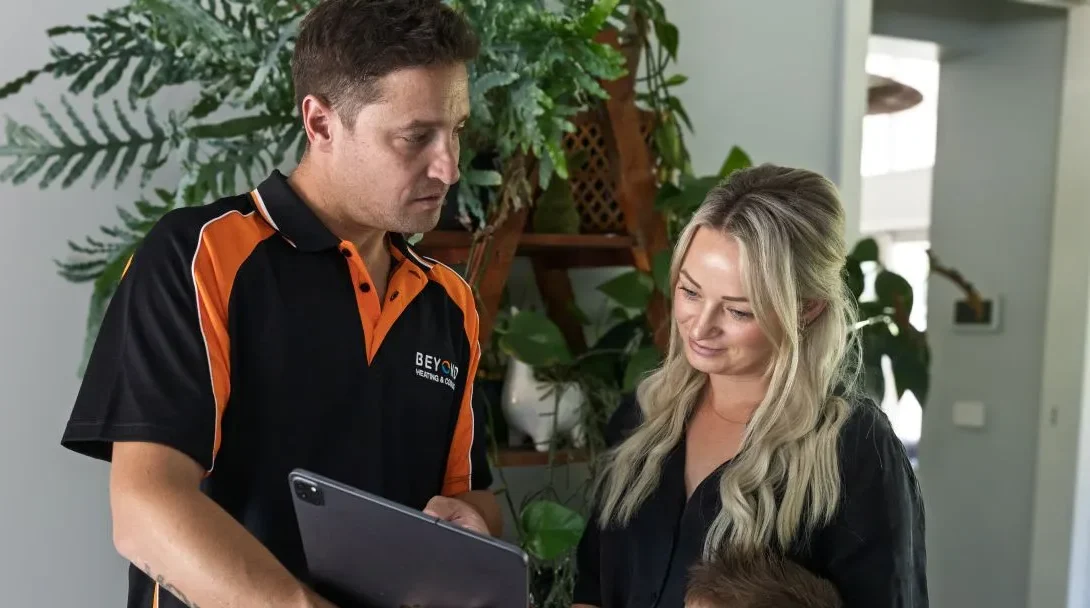
For most Melbourne homes in 2026, reverse cycle ducted systems provide a more advantageous long-term solution. The best choice will depend on the age and condition of your current system, available electrical capacity, your home’s layout, and your heating requirements throughout the year. We offer complimentary in-home assessments across Melbourne, including Fawkner, Craigieburn, and nearby suburbs, where we can evaluate your situation and present tailored recommendations. There is no pressure involved, and you will receive no unexpected quotes.
Address Frequently Asked Questions About Heating Solutions in Melbourne
Is Gas Heating Being Phased Out in Victoria?
Not for existing homes. As of January 1, 2024, new residential constructions requiring planning permits are prohibited from connecting to mains gas and must transition to all-electric systems. Homes already connected to gas can continue using their systems, replace them with new gas appliances, or voluntarily opt for electric systems. The ban specifically targets new builds, not renovations.
Can I Replace My Old Ducted Gas System with a New Gas Unit?
Yes — if you live in an existing home already connected to gas, you can replace a failing ducted gas unit with a new one. The installation must be conducted by a licensed gas fitter in accordance with AS/NZS 5601 gas installation standards, but it is not affected by the bans on new constructions.
What Are the Costs Involved in Switching from Ducted Gas to Reverse Cycle in Melbourne?
For a typical three-bedroom home in Melbourne with existing ductwork in satisfactory condition, the installation of a ducted reverse cycle system starts at approximately $5,500 and can exceed $10,000 for larger homes with multiple zones or premium units. If an upgrade to your switchboard is necessary to handle the load, expect an additional cost of $1,500 to $2,500. Beyond provides fixed-price quotes following a complimentary in-home assessment, ensuring no fluctuating estimates once the work begins.
Do Reverse Cycle Systems Perform Efficiently During Melbourne Winters?
Yes — modern reverse cycle units are designed to operate efficiently at temperatures as low as minus five degrees Celsius, which is sufficient for Melbourne’s coldest mornings. While performance may diminish in extreme cold compared to gas, for the majority of Melbourne homes, the difference is minimal. Proper sizing of the unit based on your home’s heating requirements is more critical than merely the choice of system.
Will Transitioning to Reverse Cycle Result in Real Savings?
Most households in Melbourne can expect to save between $400 and $800 annually on running costs when switching from ducted gas to ducted reverse cycle, assuming similar usage patterns. The potential savings could be even greater if you’re currently using separate heating and cooling systems, as one ducted reverse cycle unit can replace both, eliminating the costs associated with maintaining a second system.
Do I Need to Hire Both an Electrician and a Gas Fitter for the Transition?
Yes — a licensed gas fitter is essential for disconnecting and safely capping the old gas line, while a licensed electrician will manage the electrical setup for the new reverse cycle unit and any necessary switchboard upgrades. Beyond coordinates both trades as part of a comprehensive installation, so you won’t need to juggle multiple contractors. Gas disconnection must be performed by a Type A gas fitter in accordance with Energy Safe Victoria regulations.
What Is the Typical Installation Timeline for a Reverse Cycle Ducted System?
For a standard three-bedroom home in Melbourne with existing ductwork, the full installation usually takes one to two days. If the existing ductwork needs replacement or reconfiguration, or if the switchboard requires upgrading, expect a timeframe of two to three days. We provide a detailed schedule as part of the quote to assist in your planning.
Ready to Gain Clear Insights for Your Home?
Arrange a complimentary in-home assessment with Beyond Heating and Cooling. Our team will evaluate your home, review your current system, calculate the costs for both heating options tailored to your specific situation, and present you with the best solution — along with a thorough explanation of our recommendation. We proudly serve Fawkner, Craigieburn, and all areas of Melbourne. Contact us or request a quote online.
Original Article First Published At: Ducted Gas Vs Reverse Cycle — What Melbourne Homeowners Are Choosing In 2026
The Article: Ducted Gas vs Reverse Cycle: Preferences of Melbourne Homeowners 2026 first appeared on https://writebuff.com
The Article Ducted Gas vs Reverse Cycle: Melbourne Homeowner Preferences 2026 Was Found On https://limitsofstrategy.com
The Article Ducted Gas and Reverse Cycle: Preferences of Melbourne Homeowners 2026 found first on https://electroquench.com