Understanding the Building Certification Process: Ensuring Compliance with Safety, Health, and Sustainability Standards
- Local Authority
- State Administration
- Nationally under the National Construction Code
Construction professionals engage a building certifier to conduct inspections and grant approvals at various phases throughout the building process. Following each inspection, notifications are promptly dispatched to the property owner.
For further details, please consult Form 16 – Inspection Certificate.
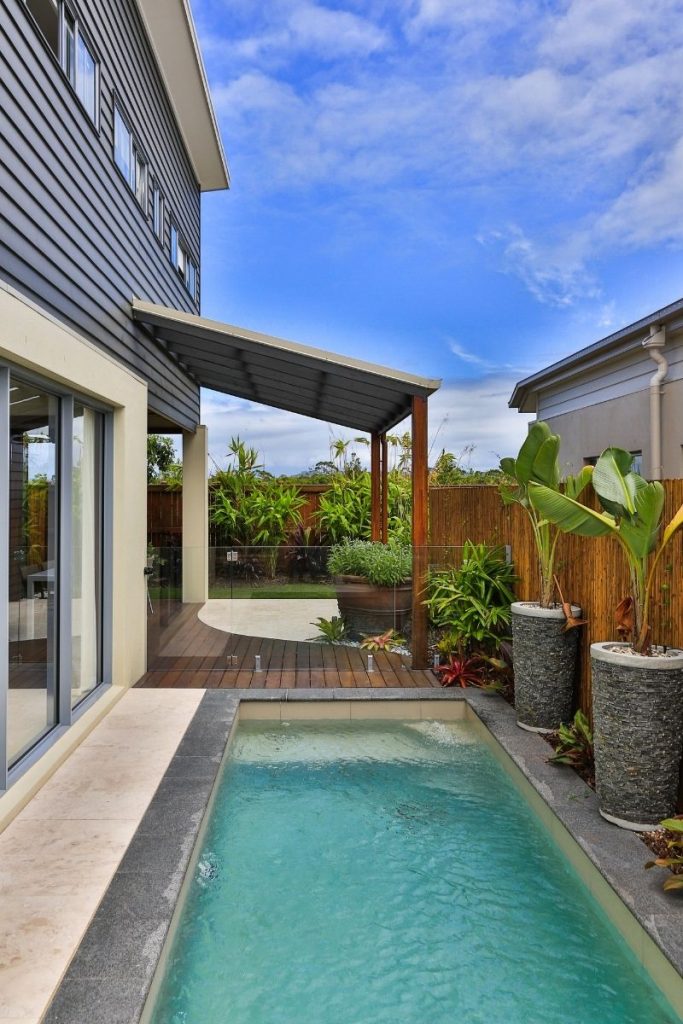
Key Insights on Inspections for Class 1a to Class 10 Buildings
Buildings are classified according to their intended use and architectural design, highlighting their roles within the community.
At A1 Certifier, we have expertise in all building classifications, with a particular emphasis on Class 1a Buildings, which include residential properties.
Class 1a buildings are defined as individual residences primarily designed for living purposes. This category encompasses standalone homes, duplexes, townhouses, villa units, and terrace houses.
Essential Inspections for Class 1a and Class 10 Buildings
- Footing – This inspection takes place after the foundation material has been excavated and before concrete is poured for footings or floor slabs.
- Floor slab – An inspection for floor slabs occurs once the formwork and reinforcement are established, prior to the pouring of concrete.
- Frame – A comprehensive inspection of the frame is necessary (please refer to section 44 of the Building Regulations 2021 for further information).
- Final acceptance – This inspection evaluates all outstanding items, including certifications for termite protection, wet area membranes, glazing, smoke detectors, and energy efficiency measures.
During the final inspection of Class 1a buildings, we ensure compliance in these critical areas:
- Siteworks and drainage
- Termite management systems
- Damp and weatherproofing
- Fire safety measures
- Health and amenity considerations
- Safe movement and access provisions
- Construction of wet areas
- Glazing standards
- Sub-floor ventilation
- Energy efficiency compliance
- Water conservation strategies
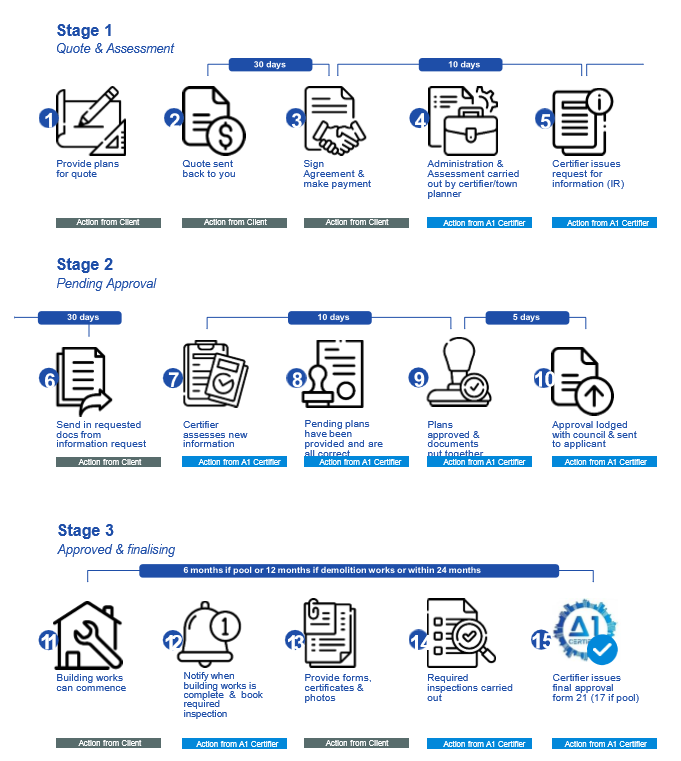
Discover Our Comprehensive Building Certification Process
What Common Misconceptions Exist About Engaging a Building Certifier?
It is crucial to clarify that a building certifier does not manage construction projects, nor do we act as building inspectors.
Our primary role is to verify that builders comply with the approved building plans and that all necessary inspections meet the standards established by local authorities, state administrations, and the National Construction Code.
A1 Certifier is dedicated to ensuring that the builders we work with deliver construction that adheres to the highest quality standards.
We thoroughly examine all work to guarantee it meets our stringent requirements. Our approval is essential for all completed work, and we pride ourselves on our strong reputation and licensing based on this commitment.
If any element of the construction deviates from the approved plans, we provide detailed guidance to facilitate necessary corrections for full compliance.
We keep our clients informed about the progress of their construction approvals.
Contact A1 Certifier today to discuss your forthcoming building projects.
We operate throughout Queensland, covering areas from the Gold Coast to Ipswich and extending to Mackay.
Original Article First Published At: How Does Building Certification Work?
The Article: Building Certification: Understanding the Process and Benefits first appeared on https://writebuff.com
The post Building Certification Process and Its Key Benefits Explained appeared first on Limits Of Strategy.
The Article Building Certification Process: Key Benefits Uncovered found first on https://electroquench.com