
When evaluating gas and electric hot water systems, many Sydney homeowners only consider their choices when their current system breaks down—often on a cold morning with the family awaiting their turn for a shower. It is vital to recognise that no single solution caters to everyone’s needs. Electric storage tanks usually present the most economical purchase and installation costs. Heat pumps provide the greatest efficiency among electric options, while gas systems are particularly advantageous for homes that already have gas connections and require a dependable hot water source for busy households.
Choosing the best system for your home involves several key factors: the availability of a gas connection, the number of residents and their hot water usage patterns, the installation space available, and whether you utilise rooftop solar panels. This guide will assist you in assessing these aspects, streamlining your decision-making process before consulting a plumber regarding your current setup.
- Heat pumps consume significantly less energy compared to traditional electric tanks or gas systems for the same volume of heated water.
- Gas hot water systems necessitate either a gas connection or space for LPG bottles.
- Utilising rooftop solar can substantially lower the operational costs of electric tanks or heat pumps.
- Transitioning from gas to electric, or vice versa, requires adjustments to pipework, power supplies, or flues, necessitating a thorough site evaluation prior to installation.
- In New South Wales, all new hot water system installations must be conducted by a licensed plumber or gas fitter, who will issue compliance certificates.

Comprehensive Comparison of Gas and Electric Hot Water Systems
The following table outlines the primary differences between gas and electric hot water systems, drawing on guidelines from the Australian Government’s energy.gov.au and its Your Home guide.
| Comparison Criteria | Electric Storage | Heat Pump (Electric) | Gas Continuous Flow or Storage |
|---|---|---|---|
| Initial Purchase and Installation Cost | Lowest among the three options | Higher initial purchase and installation cost | More expensive than electric tanks but less costly than heat pumps |
| Operating Cost | Usually more expensive to operate unless powered by solar energy | Cost-effective to operate | Moderate to high operating costs |
| Heat Output Relative to Energy Consumption | Just under one unit of heat for each unit of electricity | Approximately three to five units of heat for each unit of electricity | About three-quarters to just under one unit of heat for each unit of gas |
| Requirements for Home Installation | Requires a power supply and space for the tank | Needs outdoor space for the unit | Requires a gas connection or LPG bottles, plus outdoor venting |
| Risk of Running Out of Hot Water | Possible if the tank size is insufficient | Possible if the tank size is insufficient | Continuous flow units do not run out, but storage tanks may if undersized |
Understanding How Electric Hot Water Systems, Including Heat Pumps, Operate
Electric storage systems heat water using an element located within an insulated tank—similar to a large kettle—and maintain the temperature until needed. Approximately half of Australian households utilise these systems because they are the most cost-effective to purchase and install, although they often incur higher running costs unless powered by rooftop solar.
Many electric tanks operate on an off-peak or controlled load circuit, allowing water to be heated during periods of lower electricity costs. The Your Home guide recommends that tanks exceeding 250 litres are ideal for off-peak usage, as smaller tanks may deplete their hot water supply before the circuit reactivates.
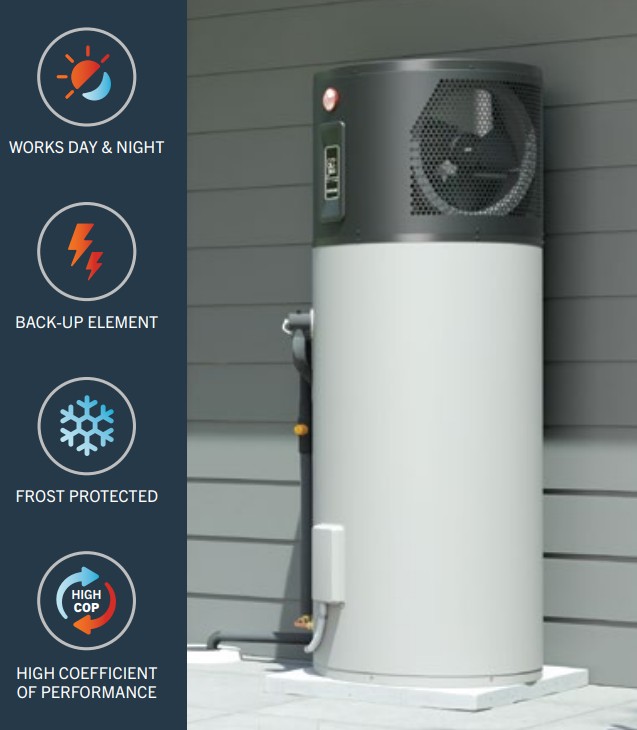
Heat pumps, although classified as electric hot water systems, function differently. They do not directly heat water; rather, they employ a fan and compressor to extract warmth from the surrounding air and transfer it into the tank. Government data indicates that heat pumps consume about 30 percent of the energy used by traditional electric systems. When contemplating heat pumps, consider the following:
- The compressor generates noise; therefore, placement should be away from bedroom windows and neighbours.
- An integrated unit can be mounted on top of the tank, serving as a straightforward replacement for an old electric tank.
- A split unit separates the tank and the outdoor compressor, allowing for flexible positioning of each component.
Electric instantaneous units are also available; however, the Your Home guide warns that they draw substantial power and usually require a three-phase connection, which many households may not have.
How Gas Hot Water Systems Function in Sydney Homes
Gas systems heat water by combusting gas, either as it flows through the unit or within a storage tank. The most prevalent type is continuous flow gas hot water, which heats water on demand as taps are turned on, ensuring there is no shortage. These units are compact as they do not require a storage tank. In contrast, gas storage tanks heat water quickly, allowing for a smaller tank size compared to electric systems. The government guide highlights that these tanks can be particularly inefficient, as heat can escape from the bottom where the flame is located.
Typically, gas hot water systems are installed outdoors due to venting regulations. Natural gas is supplied through the street network, while homes without this connection can operate on bottled LPG. The Your Home guide indicates that an LPG system generally requires two or more 45 kg bottles to avoid frequent replacements, with running costs for LPG systems potentially two to three times higher than those for systems connected to natural gas.
Assessing the Running Costs and Efficiency of Gas and Electric Hot Water Systems
Heating water constitutes a significant portion of a household’s energy consumption. The Australian Government estimates that this accounts for 15 to 30 percent of total household energy use, making it the second-largest contributor to energy expenses in the home.
The Your Home guide evaluates systems based on their heat output relative to energy input. A heat pump delivers approximately three to five units of heat for every unit of electricity consumed, while a new electric storage tank provides just under one unit, and gas systems yield between three-quarters and just under one unit of heat for each unit of gas. The guide identifies heat pumps as among the most economical systems to operate, while gas systems tend to be seen as more costly in the long run. Households considering the replacement of a gas system are encouraged to explore efficient electric alternatives. Gas systems are known for their reliability and space efficiency.
Ultimately, your actual costs will depend on your electricity tariffs, the household’s hot water consumption, and whether you utilise solar energy. Homes equipped with extensive rooftop solar systems can use their own daytime power to operate an electric tank or heat pump. The Your Home guide suggests this can lead to very low-cost hot water with minimal emissions. Conversely, homes with existing gas connections and no solar may find that a continuous flow gas system is a practical choice, especially when the household experiences frequent back-to-back showers.
Do You Have Access to a Gas Connection for Your Hot Water System?
Before opting for gas, the first consideration is whether your home has a gas connection. If you currently have a gas meter supplying a cooktop or an older gas hot water system, then access is already established. Switching to a continuous flow unit might necessitate a larger gas pipe or meter to provide sufficient hot water for multiple taps simultaneously.
For homes that have never had gas service, a new connection can be requested through Jemena, the gas network provider, or via your energy retailer. Jemena advises that from 1 October 2026, customers requesting new gas connections will be responsible for covering the full connection cost upfront. For homes without gas, this connection expense should be included in the overall cost comparison alongside the hot water system itself.
Determining the Optimal Hot Water System for Your Household
Once you know what your property can accommodate, the next step is for your household to make the final decision. We frequently guide Sydney homeowners through these essential considerations when selecting a replacement:
- How many residents live in your home? The Your Home guide suggests a typical usage of about 50 litres of hot water per person per day, and undersized tanks can lead to running out of hot water.
- When do household members typically use hot water? Multiple showers in quick succession during mornings favour a continuous flow gas system or a properly sized tank.
- Do you have rooftop solar panels? Solar energy can make operating an electric tank or heat pump more economical.
- What outdoor space is available? A heat pump requires an outdoor location, ideally distanced from bedroom windows.
- Are you constructing a new home? In NSW, BASIX mandates energy and emission targets. The Your Home guide indicates that higher emission systems, such as electric storage tanks, might require solar installations to comply.
If your current system is aging but still functional, it is wise to explore your options now. The government guide emphasises that making a decision is far easier when you are not caught in a cold shower waiting for a replacement.
Managing the Transition Between Gas and Electric Hot Water Systems
Performing a like-for-like replacement is the simplest installation, as the necessary pipework and supply are already in place. Transitioning from electric to gas involves connecting the new unit to the gas supply and ensuring the appropriate flue is fitted, with careful attention to safe venting. Conversely, switching from gas to a heat pump requires alterations to the site’s requirements; the outdoor unit must be suitably positioned, and new electrical circuits or power points will be necessary. We collaborate with trusted local electricians for these tasks.
Regardless of the direction you choose, the installation must adhere to the national plumbing standard for heated water services, AS/NZS 3500.4. Storage systems must heat water to at least 60°C regularly to prevent bacterial growth, such as Legionella, while a tempering valve must be installed to ensure tap water does not exceed 50°C to prevent scalding. In NSW, all plumbing or gas fitting work, including LPG, must be conducted by a licensed plumber or gas fitter, irrespective of the project’s cost. Blue Rhino Plumbing holds NSW contractor licences 289152C and 356773C, ensuring that plumbing, gas connections, and flue installations are managed by a cohesive team, and you will receive compliance certificates for all installations.
For further information about the systems we install and replace, visit our hot water repairs and installation page, or learn about connections and compliance on our gas fitting page.
Frequently Asked Questions About Gas and Electric Hot Water Systems
Which hot water system is more cost-effective to operate: gas or electric?
The answer depends on the specific electric system in use. Government guidance indicates that heat pumps are economical to operate, while standard electric storage tanks often incur higher running costs unless they are powered by solar energy. Gas systems generally have moderate to high operating costs. Your specific tariffs, hot water consumption, and solar energy usage will ultimately influence the final outcome.
Is a heat pump a superior option compared to gas hot water systems?
From an energy efficiency perspective, yes. A heat pump can generate approximately three to five units of heat per unit of electricity consumed, whereas a gas system produces less than one unit of heat per unit of gas. Although heat pumps come with a higher initial cost and require outdoor space away from bedrooms, gas continuous flow systems are often better suited for homes with existing gas connections that need a consistent hot water supply.
Can electric hot water systems operate on off-peak power?
Many electric storage tanks are designed to operate on an off-peak or controlled load circuit, which offers lower rates. Tanks larger than 250 litres are best suited for this type of operation. Smaller tanks may run out of hot water before the circuit is reactivated. Certain heat pumps may only operate with specific types of controlled load circuits, so it is essential to check the manufacturer’s instructions.
Are gas hot water systems required to be installed outdoors?
Due to venting requirements, gas hot water units are generally installed outdoors. Some models of gas continuous flow can be installed indoors, provided adequate ventilation is available. We evaluate possible locations for the unit and flue during our property assessments.
Is a licensed gas fitter necessary for gas hot water system installation in NSW?
Yes, a licence or certification is mandatory for any plumbing, drainage, or gas fitting work in NSW, including LPG gas fitting, regardless of the project’s cost. This includes connecting a new gas hot water system to the supply.
Get Professional Assessment of Your Hot Water System from Blue Rhino Plumbing
If you are weighing the advantages and disadvantages of gas versus electric hot water systems, your next step is to evaluate your existing system, gas supply, and surrounding space. We will provide you with the best options tailored to your home and household needs, overseeing the supply and installation of your chosen system, whether it involves a straightforward replacement, a heat pump, or a transition from electric to gas.
Blue Rhino Plumbing serves all areas of Sydney, including Ryde, North Ryde, and Macquarie Park, with technicians available around the clock for emergencies if your hot water system has already failed. To discuss your requirements, call 0468 014 771, email plumbing@thebluerhino.com, or submit an enquiry. Rueben and the team are eager to assist you in determining the best solution for your home.
Original Article First Published At: Gas vs Electric Hot Water: Which Hot Water System Suits Your Sydney Home
The Article: Gas Vs Electric Hot Water Systems for Your Sydney Home first appeared on https://writebuff.com
The post Gas and Electric Hot Water Systems for Sydney Homes appeared first on Limits Of Strategy.
The Article Hot Water Systems for Sydney Homes: Gas and Electric Options found first on https://electroquench.com